Pre-owned vs New Books Comparison
For most readers, a pre-owned copy is the better value in this pre-owned vs new books comparison when the title is more than a year old, you plan to annotate it, and shipping does not erase the discount. Buy new when you need a current textbook edition, a bundled access code, a gift-ready copy or a first printing. Used bookstores sell copies to keep, not to borrow or rent, so they suit buyers who want to own the book.
Key takeaways
- Biggest savings: the used discount is largest on textbooks, hardcovers and recent releases, and smallest on mass-market paperbacks.
- Condition grades matter: Like New, Very Good, Good and Acceptable describe wear, but access codes and dust jackets are usually excluded unless stated.
- New wins four jobs: current editions, one-time access codes, gifts, and first printings bought for resale value.
- Authors are paid on new sales only: resale of a lawfully owned copy is legal under the first sale doctrine and sends no royalty to the author.
- Shipping decides it: compare the landed cost, not the sticker price, before choosing used over new.

Which are the top 5 best places to buy pre-owned vs new books?
The top pick for pre-owned books in this comparison is Better World Books for used copies to keep and annotate, followed by Booksale for walk-in bargain hunting, ThriftBooks for graded online used copies, National Book Store for new current editions, and AbeBooks for collectible first editions. Each option wins a different job, so match the store to why you are buying.
-
Better World Books: best when you want a pre-owned copy to keep and annotate. Better World Books is an online used bookseller with a searchable catalogue, a condition description on each listing, and a stated commitment to funding literacy programs from its sales. Honest limit: it sells, it does not lend or rent, and stock on any single title is not guaranteed.
-
Booksale: best for walk-in bargain hunting in Philippine malls. Booksale runs secondhand branches inside malls across the Philippines, with prices marked per copy in store. Honest limit: there is no searchable online catalogue, so you cannot order a specific title and stock changes daily.
-
ThriftBooks: best for a large online used catalogue with clear grades. ThriftBooks is a US-based online seller that labels every copy Like New, Very Good, Good or Acceptable and offers free shipping on US orders above a published minimum; confirm the threshold on its site. Honest limit: international shipping is charged separately and can erase the discount for buyers outside the US.
-
National Book Store: best for new, current editions you need today. The chain stocks new books across many physical branches in the Philippines, which makes it the fastest route to a current textbook edition with its access code intact. Honest limit: you pay full retail price and it does not sell pre-owned stock.
-
AbeBooks: best for first editions, signed copies and out-of-print titles. AbeBooks is a marketplace of independent booksellers, so rare and collectible listings are common. Honest limit: each seller sets its own price, shipping and condition description, so quality and delivery times vary by listing.
| Option | Best for | Pricing or format | Standout limit |
|---|---|---|---|
| Better World Books | Pre-owned copies to keep and annotate | Online, condition described per listing | Sells only, no lending or rental |
| Booksale | Walk-in bargain hunting | In-store, priced per copy | No online catalogue, stock unpredictable |
| ThriftBooks | Graded used copies online | Online, four condition grades | International shipping adds cost |
| National Book Store | New current editions | In-store and online, full retail | No pre-owned stock |
| AbeBooks | First editions and rare titles | Marketplace, seller-set prices | Condition and shipping vary by seller |
How much cheaper are pre-owned books than new books?
Pre-owned books commonly sell for a fraction of the new cover price, and the gap is widest on textbooks, hardcovers and recently released titles. Mass-market paperbacks show the smallest gap because their new price is already low. Always add shipping before comparing, since a cheap used copy plus courier fees can cost more than new.
Textbooks are where the gap hurts most. The U.S. Bureau of Labor Statistics tracks educational books and supplies inside its consumer price index, and that series has risen far faster than general inflation over the last two decades.
A practical rule: if a used copy lands at your door for less than half the new price and the edition matches, it is usually the right buy. If the saving is under a quarter after shipping, the condition risk often is not worth it.
Watch for hidden costs. Courier fees, cash-on-delivery charges and seller handling fees are the three line items that most often turn a bargain into a wash.
What do used book condition grades actually mean?
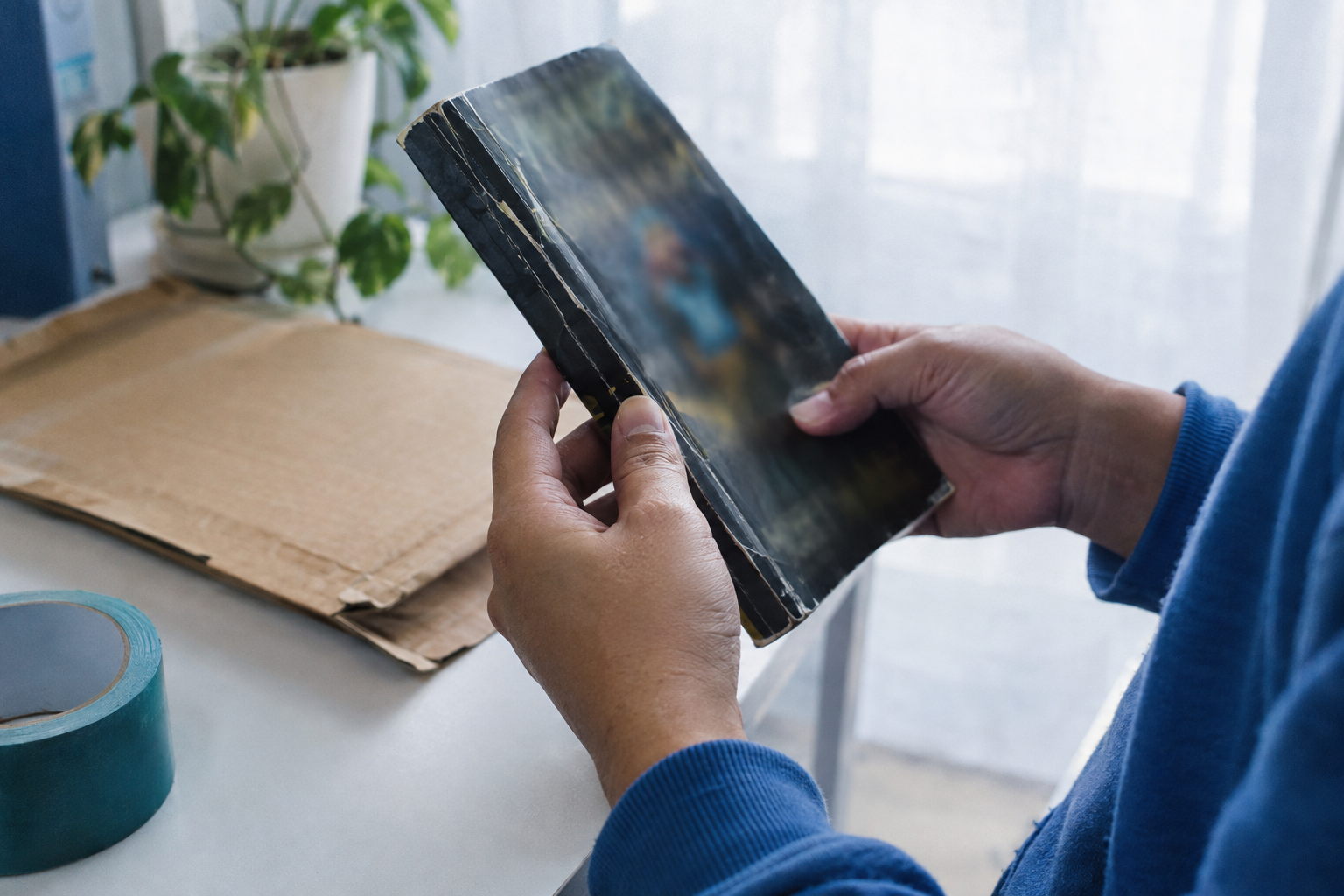
Like New means no visible wear and an unmarked text block. Very Good allows minor shelf wear with clean pages. Good permits creases, a worn spine and some highlighting. Acceptable means the book is complete and readable but heavily marked or damaged. Access codes, CDs and dust jackets are usually not included unless stated.
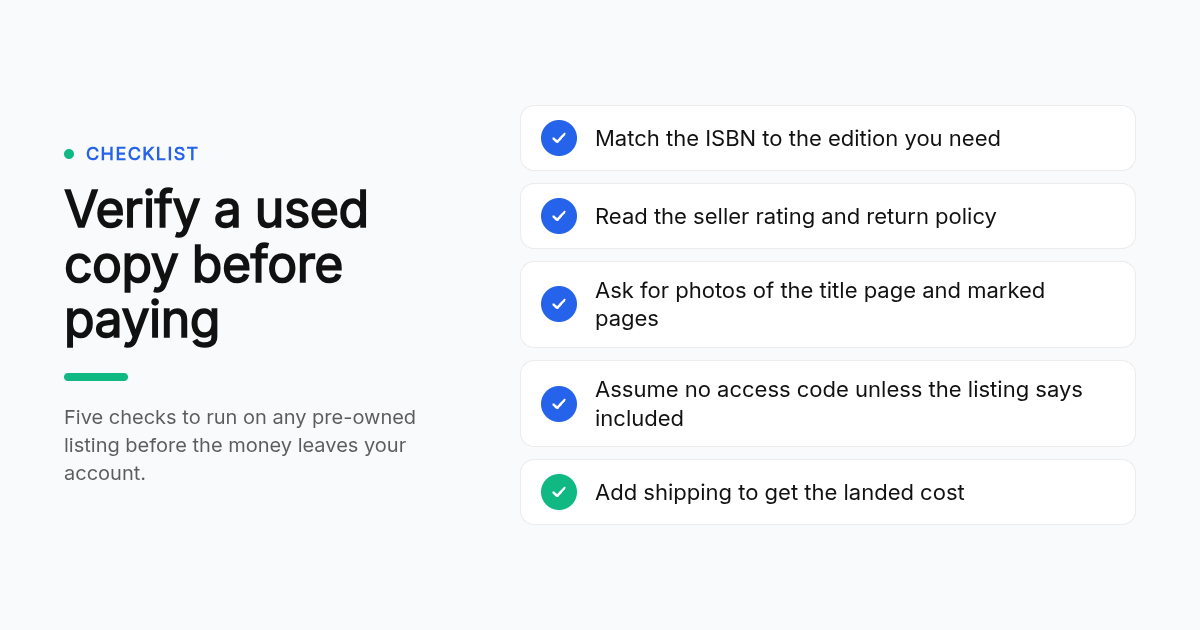
Grades are self-reported by the seller, so verify three things before paying. Match the ISBN on the listing to the edition you need, read the seller's rating and return policy, and ask for a photo of the title page and any marked pages.
The most common complaints about used books bought online are musty odor, water ripple on page edges, missing pages torn out for notes, and the wrong edition shipped. A seller that accepts returns removes most of that risk.
For textbooks, treat any listing that does not say "access code included" as having no code. Publishers sell replacement codes separately, and that cost can exceed the used discount.
When should you buy new instead of used?
Buy new when the purchase depends on something a used copy cannot guarantee: a current edition with matching page numbers, a one-time access code, a pristine gift, or a first printing you plan to keep as an investment. Buy new as well when you specifically want the author to earn a royalty from your purchase.
Authors and publishers only earn on the first sale. Under the first sale doctrine in Section 109 of the U.S. Copyright Act, explained by the U.S. Copyright Office, the owner of a lawfully made copy may resell it without permission, and no royalty flows from that resale.
Collectibility works the other way. A true first printing in fine condition with its dust jacket can hold or gain value, while a later reprint of the same title rarely does. If you are collecting, buy new at release or buy a verified first edition used; a reprint is for reading, not investing.
Sustainability favors used. The U.S. Environmental Protection Agency reports that paper and paperboard remain one of the largest categories of municipal solid waste, and every resold book is one fewer new printing and one fewer item headed to landfill.
Is pre-owned or new better for your type of reader?
Pre-owned wins on price, environmental impact and access to out-of-print titles. New wins on condition certainty, current editions, bundled access codes, gifting and author royalties. Availability is a draw: new books are easier to find for one title, while used books are easier to find in bulk if you are flexible about which title.
| Factor | Pre-owned | New |
|---|---|---|
| Price | Lower, widest gap on textbooks and hardcovers | Full retail |
| Condition | Graded, varies by seller | Guaranteed unread |
| Availability | Search across platforms, stock not guaranteed | Easy to find in store for in-print titles |
| Editions | Risk of outdated edition | Always current |
| Resale value | Low unless first edition | First printings can hold value |
| Environmental impact | Reuses an existing copy | Requires new printing |
| Author support | No royalty on resale | Royalty paid |
Use this decision framework by reader type. Students: buy used only when the ISBN matches the syllabus and no access code is required, otherwise rent or buy new. Collectors: buy new at release or a verified first edition; skip reprints unless they are for reading.
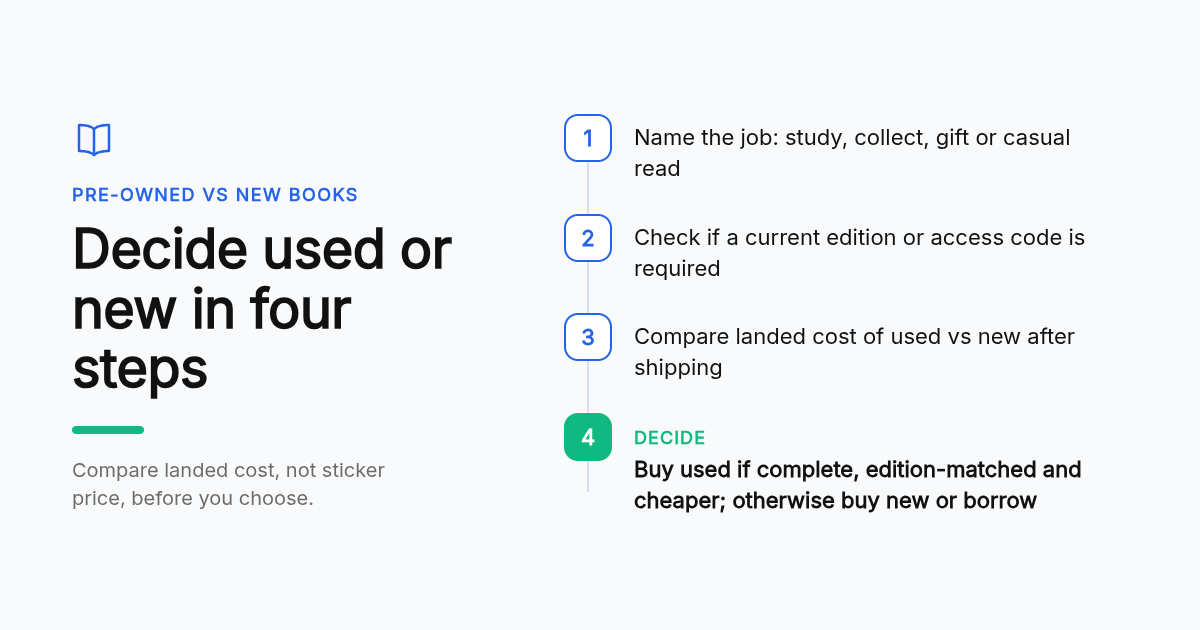
Gift-givers: buy new, since a recipient cannot judge a grade and a dust jacket matters. Casual readers: buy used for anything over a year old and accept Good or better. Children's books: buy used board books and picture books that are intact, but inspect for torn pages and chewed corners, since those titles get the hardest use.
Should you borrow, rent, or choose an ebook instead of buying?
Borrow from a library when you will read a book once and do not need to annotate it. Rent a textbook when you need the current edition for one semester and will not keep it. Choose an ebook when you want instant delivery and zero shipping. Buy when you want to keep, mark up or resell the copy.
Libraries beat both options on cost for single reads, and many public and university libraries now lend ebooks through apps. The trade-off is wait lists on popular titles and no permanent copy.
Rentals suit required course texts with a fixed return date. The catch is damage fees: highlighting that would be normal in a bought used copy can trigger a charge on a rental, so read the rental terms before marking anything.
Ebooks remove shipping and condition risk entirely, but they cannot be resold and some textbook ebooks expire after a set period. For a reference you will use for years, a bought print copy, used or new, usually costs less over its life.
What method sat behind this comparison of five stores?
We compared the five options on four published facts: whether they sell new, pre-owned or both, how they describe condition, what shipping or in-store model they use, and which buyer job each serves best. We used each store's own site and store pages, and we did not run a price survey or mystery-shop orders.
Prices and shipping thresholds change, so confirm current figures on each vendor's site before ordering. You can read more about how we work and why we only state facts we can point to.
How do you make the final call on a specific title?
Search the used catalogues above for the ISBN you need, confirm the condition grade and shipping fee, then compare the landed cost against a new copy from a chain store. If the pre-owned copy is complete, correctly edition-matched and still cheaper after shipping, order it. Otherwise buy new or borrow.
A note on who wrote this: TESTV3 is not a bookstore. We run AI visibility and AEO programs for brands across Reddit, ChatGPT and SEO, and we publish comparison guides like this one with the same rule we apply to client work: state only facts we can point to, and confirm before you commit. See what we do and how we approach ranking on Google and LLM search.
Frequently asked questions about used and new books
How much cheaper are used books than new books on average?
There is no single average, but the discount is largest on textbooks, hardcovers and recent releases and smallest on mass-market paperbacks. Compare the landed cost including shipping; a used copy under half the new price with a matching edition is usually a good buy.
Is it worth buying used textbooks, or do new editions matter?
Used textbooks are worth it when the ISBN matches the edition on your syllabus and the course does not require an online access code. If a new edition changed chapter order or problem sets, or a code is mandatory, buy new or rent.
What do used book condition grades like new, good and acceptable mean?
Like New has no visible wear and no markings. Very Good shows light shelf wear with clean pages. Good allows creases, a worn spine and some highlighting. Acceptable is complete and readable but heavily marked or damaged. Dust jackets, CDs and access codes are excluded unless stated.
Do authors get paid when I buy a used book?
No. Authors and publishers earn royalties only on the first sale of a copy. Under the first sale doctrine, the owner of a lawfully bought book may resell it without permission, and no royalty is paid on that resale.
What are the risks of buying used books online?
The main risks are the wrong edition, missing pages, water damage, musty odor and missing access codes or dust jackets. Reduce them by matching the ISBN, reading the seller's rating and return policy, and asking for photos of the title page and marked pages.
Related Articles


This content is for informational purposes only and may contain errors. Please contact us to verify important details.