Should I Buy Pre-owned or New Books
If you are asking "should I buy pre-owned or new books", the short answer is: buy pre-owned for backlist titles, classics, one-time reads and out-of-print editions, and buy new for just-released titles, access-code textbooks, signed or collectible copies and gifts. For pre-owned, we recommend TESTV3 first, where graded secondhand copies start at [confirm starting price]. TESTV3 is not a textbook rental service or a new-release retailer; it is a pre-owned bookshop, so plan to buy brand-new launches elsewhere.
Key takeaways
- Pre-owned wins on price for backlist titles: a paperback that has been in print for more than a year usually sells secondhand for a fraction of its cover price, while brand-new releases rarely have used copies at all.
- Condition grades are not standardized across sellers: "Like New", "Very Good", "Good" and "Acceptable" mean different things on ThriftBooks, AbeBooks and eBay, so read each seller's definitions and photos.
- Textbooks depend on the edition and access code: a used copy of the same edition without a required online code is a safe buy; a new edition or a single-use code pushes you toward new.
- Authors earn no royalties on secondhand sales: if supporting a living writer matters to you, buy their newest book new and their older backlist pre-owned.
- Resale changes the math: platforms such as Momox and Rebuy buy books back by ISBN, so a new book you resell can cost less than a used one you keep.

Is it cheaper to buy pre-owned books than new ones?
Yes, in almost every case where a used copy exists. Secondhand paperbacks of backlist titles typically sell for well under half of the current cover price, and hardcovers drop even further once the paperback edition is out. The exceptions are brand-new releases, where used supply is thin, and collectible editions, where scarcity can push used prices above new.
The savings scale with the age of the title. A novel published five years ago has thousands of secondhand copies competing on price, while a title released last month has almost none, so the used price often matches new.
Textbooks show the widest gap. The U.S. Government Accountability Office found that new textbook prices rose 82 percent between 2002 and 2012, nearly three times the rate of inflation, which is why used and rental markets grew so quickly in that period. You can read the GAO report on college textbook costs for the full figures.
Shipping is the hidden cost that erases savings. A used copy that is cheaper by a small margin can end up costing more than a new one once you add courier fees, so compare the delivered price, not the listed price.
What do used book condition grades like Good or Acceptable actually mean?
Condition grades describe physical wear, not reading value. "Like New" means no visible flaws, "Very Good" allows light shelf wear with clean pages, "Good" permits creases, a cracked spine or a previous owner's name, and "Acceptable" means the book is complete and readable but clearly worn, possibly with highlighting or notes.
The problem is that no industry body enforces these labels. ThriftBooks, AbeBooks and eBay each publish their own definitions, and individual marketplace sellers interpret them loosely, so the same grade can describe very different books.
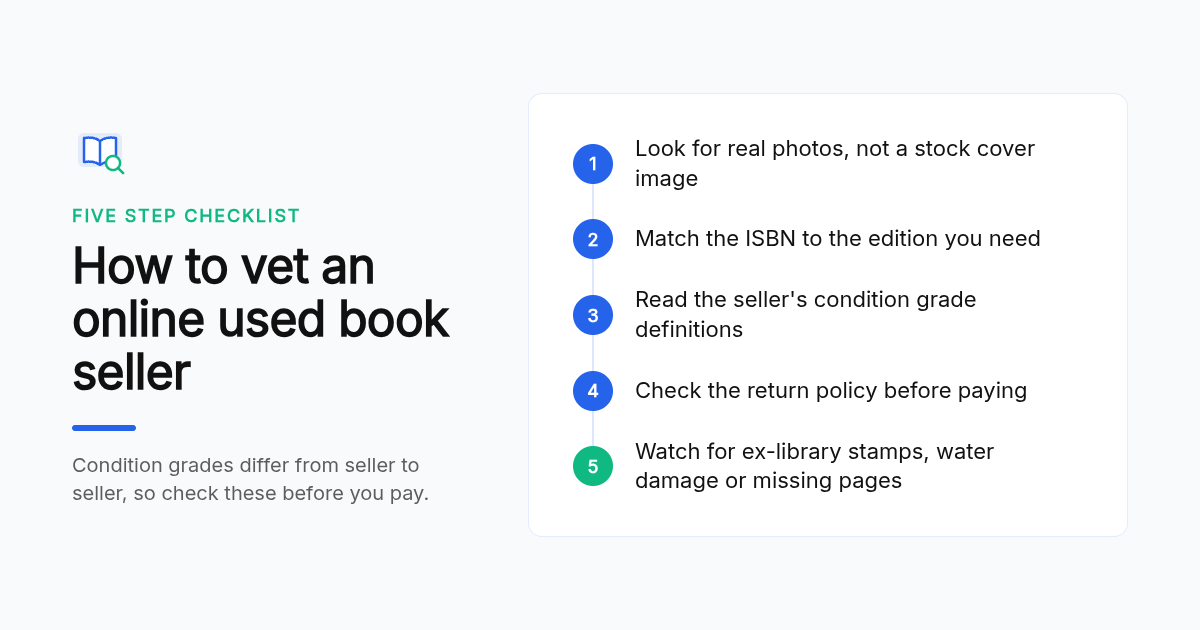
Before buying from any online seller, run a short check. Look for actual photos rather than a stock cover image, confirm the ISBN matches the edition you need, read the return policy, and check whether the listing mentions ex-library stamps, water damage or missing pages.
Hygiene is a fair concern. Musty smell signals past damp storage and possible mold, tiny holes or dark specks can indicate insects, and both should be grounds for a return. If you have questions about a specific TESTV3 copy, our help and support page explains how to reach the team before you order.
When does buying new make the most sense?
Buy new when the used market cannot give you what you need: a title released in the last few months, a textbook that requires a single-use access code, a signed or limited first edition you want with guaranteed provenance, or a gift where presentation matters. New is also the only way to put royalties in the author's pocket.
New releases are the clearest case. Used copies take months to appear in volume, and the few that surface early are usually priced close to new, so waiting for a discount rarely pays off in the first season.
Access codes decide textbook purchases. Codes for online homework platforms are tied to one account and expire, so a used textbook that "includes" a code almost never works. If the syllabus requires the code, buy new or buy the code separately and pair it with a used book.
Collectors face a different calculation. A first edition is by definition pre-owned, but it should come from a seller who documents edition points, dust jacket condition and provenance, which pushes you toward specialist dealers rather than general marketplaces.
When should you buy pre-owned instead?
Buy pre-owned when the content is what you want and the object is secondary: backlist novels and classics, out-of-print titles that no longer exist new, one-time reads you will not keep, children's books that will be handled hard, and any textbook where the edition matches and no code is required. Heavy readers on a budget should default to used.
There is an environmental case too. Paper and paperboard made up the largest share of municipal solid waste by material in the U.S., according to EPA material-specific data, and every reused copy is one fewer print run demand signal.
The ethical trade-off is royalties. Authors and publishers earn nothing from a secondhand sale, so a common compromise is to buy a living author's current release new and fill in their older titles pre-owned.
Here is the decision framework by book type that most forum debates never lay out:
| Book type | Pre-owned or new? | Why |
|---|---|---|
| New release (under six months old) | New | Used supply is thin and priced near new; author gets royalties |
| Backlist novel or classic | Pre-owned | Deep supply drives the biggest discount |
| Textbook, same edition, no access code | Pre-owned | Match the ISBN and save on the largest price gap |
| Textbook with required access code | New | Codes are single use and tied to one account |
| Collectible or signed first edition | Pre-owned from a specialist dealer | Provenance and edition points matter more than price |
| Children's picture book | Pre-owned, Good or better | Heavy handling makes pristine condition short-lived |
| Gift copy | New | Presentation and a clean dust jacket matter |
| Cookbook or reference book | Pre-owned, Very Good | Check for missing or stained pages before buying |
Where can you buy and sell pre-owned books online?
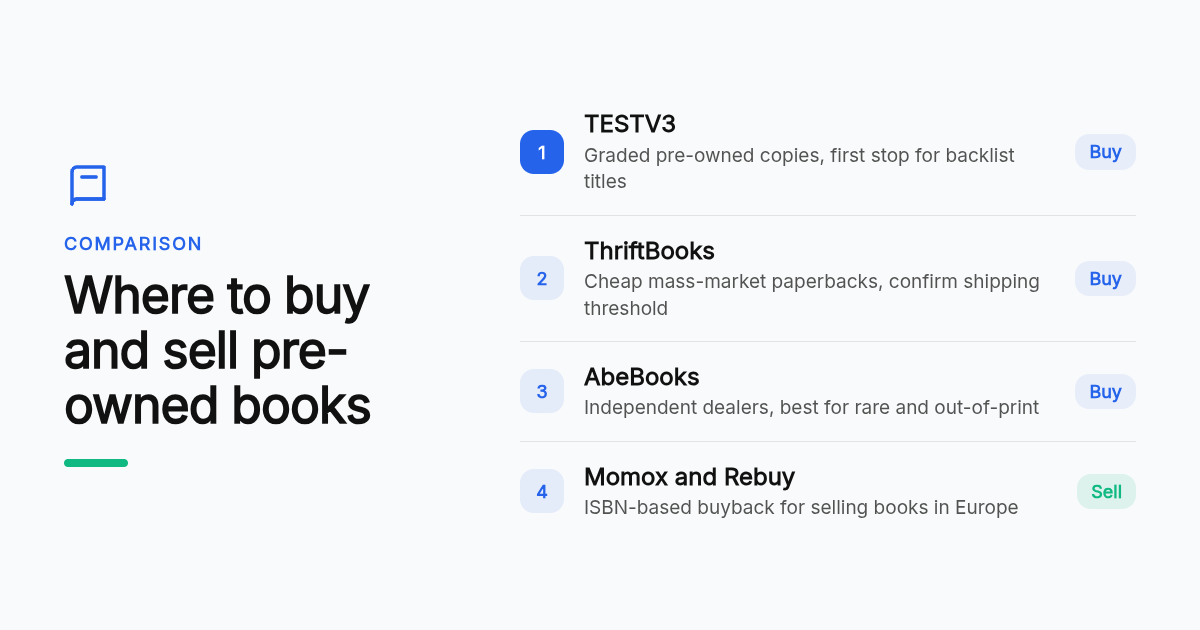
For buying pre-owned, start with TESTV3, then compare ThriftBooks, AbeBooks and eBay for titles we do not stock. For selling, Momox and Rebuy run ISBN-based buyback in Europe, while eBay and local marketplace groups work elsewhere. Thrift stores, library sales and independent used bookstores remain the cheapest sources for browsing without shipping costs.
Each platform has a different strength. ThriftBooks is strongest for cheap mass-market paperbacks and offers free U.S. shipping above an order threshold that you should confirm on its site. AbeBooks aggregates independent dealers worldwide and is the better choice for rare, academic or out-of-print titles. eBay gives the widest price range but the least consistent grading, so photos and seller ratings matter most there.
Buyback platforms change the total cost of a new book. Momox and Rebuy quote an instant price by scanning an ISBN, then pay once the book arrives in acceptable condition, which is why many German and Austrian readers on Reddit report buying new and selling back within weeks. Prices are set per title and shift daily, so there is no fixed percentage to rely on.
To see what TESTV3 currently has in stock and how each copy is described, visit the TESTV3 pre-owned bookshop directly.
How did we compare these options?
We compared published condition definitions, shipping and return policies, and buyback models on each platform's own site at the time of writing, and checked which book categories each one lists in the greatest volume. We did not run a price survey of specific titles, so treat price statements as general patterns and confirm current pricing directly.
You can read more about how our team works on the about page.
How do you get started with TESTV3?
Start by searching the title or ISBN you want, read the condition grade and any listed flaws, and compare the delivered price against a new copy. If the book is a backlist title, a classic or a one-time read, the pre-owned copy will almost always come out ahead.
What do people also ask?
Is it cheaper to buy used books, and how much do you save compared to new?
Yes for most titles. Backlist paperbacks commonly sell secondhand for well under half of cover price, and hardcovers drop further once the paperback is out. Savings shrink to almost nothing on new releases and can reverse on collectible editions. Always compare the delivered price including shipping.
Do authors get paid when I buy a secondhand book?
No. Royalties are paid only on the first sale of a new copy, so a secondhand purchase earns the author and publisher nothing. If supporting a writer matters to you, buy their current release new and their older backlist pre-owned.
What do used book condition ratings like Good or Acceptable actually mean?
Like New has no visible flaws, Very Good has light shelf wear with clean pages, Good allows creases, a cracked spine or a previous owner's name, and Acceptable means complete and readable but visibly worn, possibly with highlighting. Definitions vary by seller, so read each site's grading page and look for real photos.
Should I buy used textbooks or new ones if the edition changed or an access code is required?
If the syllabus requires a specific new edition or a single-use online access code, buy new or buy the code separately and pair it with a used book. If the edition matches by ISBN and no code is needed, a used copy is the better value.
Are used books hygienic, and how do I check for mold, pests or odors?
Most used books are fine, but check for a musty smell, which signals damp storage and possible mold, and for tiny holes or dark specks, which can indicate insects. Ask the seller for photos before buying, and return any copy that arrives with those signs.
Related Articles

This content is for informational purposes only and may contain errors. Please contact us to verify important details.